Skip to content

Italian brand

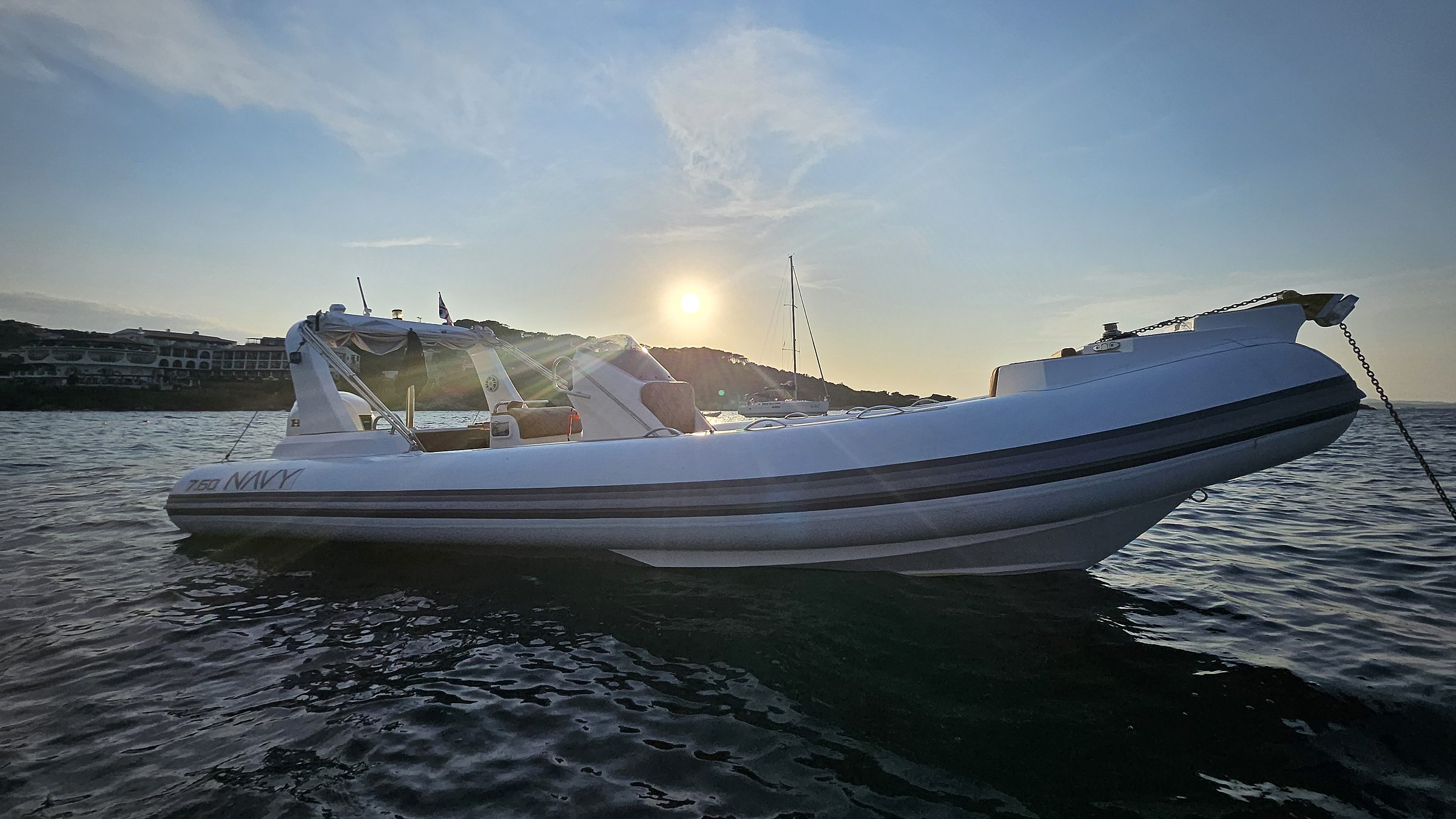
NAVY 7.60 bow in the foreground with anchor chain and the sun low on the horizon

PLATE 01

Guide — The rules · Italian Recreational Boating Code

Registration
and papers

Call +39 380 173 0961Message us on WhatsApp

In Italy, a RIB with a hull of up to 10 metres, measured according to UNI/EN/ISO 8666, is a natante da diporto: it is under no obligation to be registered and needs neither a navigation licence nor a safety certificate (art. 27, paragraph 1, of the Italian Recreational Boating Code), and it is registered only if you ask for it (paragraph 2). With a hull over 10 metres it is an imbarcazione and must be entered in the central electronic register of pleasure craft, the ATCN. In both cases you need the safety equipment required for your distance from the coast and, with an engine, third-party liability insurance.

Art. 3 · art. 27 · Legislative Decree 171/2005 · the 10-metre threshold · updated 25 September 2026

Book your visitBook a sea trial

PLATE 02

The 10-metre threshold

Natante
or imbarcazione?

The Italian Recreational Boating Code (Legislative Decree 171 of 18 July 2005) divides pleasure craft by hull length, in art. 3. A natante da diporto is «any rowing craft or any craft with a hull length of ten metres or less»; an imbarcazione da diporto has a hull over 10 metres and up to 24; above 24 metres it becomes a nave da diporto. The jet ski is a category of its own: under 4 metres, with water-jet propulsion. Almost everything else depends on this one measurement: registration, navigation licence, safety certificate, and the minimum age of whoever helms without a boat licence.

Mind which number you read. The length that decides is the hull length measured «according to the harmonised standard UNI/EN/ISO/8666», as the article puts it, not the commercial length overall printed in brochures. You will find it in the builder's documentation, the declaration of conformity: that is the figure that tells you whether your RIB is a natante or an imbarcazione.

Pleasure craft under art. 3 of the Italian Recreational Boating Code, by hull length measured according to UNI/EN/ISO 8666
DesignationHull length (ISO 8666)
Natante da diportoup to 10 metres inclusiveor any rowing craft; jet skis excluded
Imbarcazione da diportoover 10 and up to 24 metresentered in the central electronic register, the ATCN (art. 15)
Nave da diportoover 24 metresminor up to 500 GT, major above 500 GT
Jet ski (moto d'acqua)under 4 metreswith water-jet propulsion

Source: art. 3 of Legislative Decree 171/2005, text in force read on the Gazzetta Ufficiale on 19 September 2026.

NAVY 7.60 at anchor seen from the bow, white village and granite mountain behind
FIG. 01 — The 7.60 lies low in the frame, whole, its anchor chain running down into the water from the bow. Above it, the white village climbs in terraces among the pines and, higher still, granite rounded by the wind. Blue sky with long veils of cloud. At 7.60 metres overall, the NAVY 7.60 stays well below the 10-metre threshold.
NAVY 7.60 at anchor, stern three-quarter view, white Honda 250 and scrub-covered hills behind

PLATE 03 — The natante · real photograph

Unregistered,
not unregulated

Three papers a natante does not need

ART. 27, PAR. 1 · ITALIAN RECREATIONAL BOATING CODE

Natanti da diporto «are excluded from the obligation of registration» in the ATCN, from the navigation licence of art. 23 and from the safety certificate of art. 26. No registration procedure, then, and no certificate to renew.

The hull carries its own identity

DIRECTIVE 2013/53/EU · ANNEX I, PART A, POINT 2.1

Even without registration, every CE-marked pleasure craft has its own identification number: the manufacturer's country code and unique code, the serial number, the month and year of production, and the model year.

How many people: the builder's plate says

ART. 34, PAR. 3, LETTER A · BUILDER'S PLATE AND OWNER'S MANUAL

For a CE-marked natante, the maximum number of people that may be carried is documented by the builder's plate and the owner's manual. For imbarcazioni it is recorded on the licence by the authority that issues it (paragraph 1).

The insurance follows the engine

ART. 123, PAR. 3, PRIVATE INSURANCE CODE · ART. 41, PAR. 2, BOATING CODE

Compulsory third-party liability cover extends to removable engines of any power, whatever boat they are fitted to: the insured craft is the natante on which the engine happens to be mounted at the time.

All the guides

PLATE 04

Entry in the ATCN

When the RIB
must be registered

In Italy, navi and imbarcazioni da diporto are entered in the central electronic register of pleasure craft, the Archivio telematico centrale or ATCN (art. 15, paragraph 1, of the Recreational Boating Code). For a RIB, that means a hull over 10 metres, measured according to ISO 8666. Registration brings the two documents a natante does not have: the navigation licence (art. 23), on which the authority records the maximum number of people that may be carried (art. 34, paragraph 1), and the safety certificate (art. 26).

A natante can be registered too, if the owner asks for it: «natanti da diporto, at the request of the interested party, may be registered» in the ATCN «and in that case take on the legal regime of imbarcazioni da diporto» (art. 27, paragraph 2). It is a choice, not an obligation, and it brings with it the papers and the rules of imbarcazioni. Where the title of ownership is missing, the text in force accepts a sworn statement (dichiarazione sostitutiva di atto notorio) with the signature authenticated at a sportello telematico dell'automobilista, the Italian vehicle-registration desk.

On first issue, the safety certificate is valid for 8 years from registration in the ATCN for craft in design categories A and B, and for 10 years for categories C and D (art. 51 of Ministerial Decree 146 of 29 July 2008, the regulation implementing the Code). For registered RIBs, Ministerial Decree 133 of 17 September 2024 added a rule: if the tubes are replaced by someone who is neither the manufacturer nor a service centre it has authorised, the safety certificate of a CE-marked craft must be submitted for validation (art. 57, paragraph 3-bis, of Ministerial Decree 146/2008). Finally, on registered craft the lifejacket bears the registration number (art. 53, paragraph 1-bis).


Natante and imbarcazione da diporto compared: registration, documents, people on board, minimum age without a licence, navigation limits and insurance
WhatNatante (hull up to 10 m)Imbarcazione (over 10 and up to 24 m)
Entry in the ATCNnot compulsorypossible on request: the natante then takes on the regime of imbarcazioni (art. 27, par. 1 and 2)compulsoryart. 15, par. 1
Navigation licencenoart. 27, par. 1yesart. 23
Safety certificatenoart. 27, par. 1yes: 8 years in categories A and B, 10 in categories C and Dvalidity on first issue, from registration in the ATCN (art. 51, Ministerial Decree 146/2008)
Maximum number of peoplebuilder's plate and owner's manualCE-marked craft (art. 34, par. 3)recorded on the navigation licenceart. 34, par. 1
Minimum age without a licence16 yearswithin 6 miles, with an engine below 30 kW and below the legal cylinder capacities (art. 39, par. 3)18 yearssame conditions (art. 39, par. 3)
12-mile limit from the coastyes, for CE-marked natantieven in category A or B, for as long as it remains a natante (art. 27, par. 4)—art. 27 concerns natanti
Third-party liability insurancecompulsory with an enginethe policy follows the removable engine (art. 123 of the Private Insurance Code)compulsory with an engineart. 41 of the Boating Code

Sources: arts. 15, 23, 26, 27, 34, 39 and 41 of Legislative Decree 171/2005; art. 123 of Legislative Decree 209/2005; arts. 51, 53 and 57 of Ministerial Decree 146/2008 as amended by Ministerial Decree 133/2024.

Naviglia vision: the whole NAVY 9.50 Cabin under way by day, side-on, with black tubes and hull, black hard-top, turquoise upholstery and, beneath the stern sunpad, the silver cowling of a Honda BF350
FIG. 02 — Naviglia vision: the NAVY 9.50 Cabin, 9.80 metres overall. Whether it is a natante or an imbarcazione is decided by the hull length according to ISO 8666, stated in the declaration of conformity.

The documents

The papers
kept on board

A natante has no navigation licence and no safety certificate, but it does not go to sea without papers. The builder's plate, the hull number and the manual are required by the European directive for every CE-marked craft; the insurance is required by Italian law; the boat licence and the VHF licence come into play once you go beyond certain thresholds.

Close-up of the dark grey raised NAVY lettering on the white tube of the 7.60
FIG. 03 — Close-up of the dark grey raised NAVY lettering on the white tube of the 7.60. Real photograph.

Builder's plate and hull number

The hull's
identity card

Directive 2013/53/EU, transposed in Italy by Legislative Decree 5 of 11 January 2016, asks for two separate things. The first is the craft identification number, made up of five pieces of information: the manufacturer's country code, the manufacturer's unique code, the serial number, the month and year of production, and the model year (Annex I, Part A, point 2.1). The second is the builder's plate, permanently affixed and separate from the identification number, showing at least the manufacturer's name or trade mark and contact address, the CE marking, the design category, the maximum recommended load and the number of persons recommended by the manufacturer (point 2.2). For a natante, it is the plate, together with the manual, that tells you how many people you may take on board.

Bow lockers of the NAVY 7.60 open: two compartments under the sundeck, lids raised
FIG. 04 — Bow lockers of the NAVY 7.60 open: two compartments under the sundeck, lids raised. Real photograph.

The owner's manual

The book
that stays on board

Every CE-marked pleasure craft comes with an owner's manual containing all the information needed to use it safely, with particular attention to setting up, maintenance, operation, and the prevention and management of risks (Directive 2013/53/EU, Annex I, Part A, point 2.5). For a natante the manual also counts in the eyes of the law: together with the plate, it documents the maximum number of people that may be carried (art. 34, paragraph 3, of the Boating Code), and on CE-marked craft it is the manual that states which fire extinguishers must be kept on board (Annex V of Ministerial Decree 146/2008, section E). It is worth keeping it on board, in a dry locker.

Spoked stainless steering wheel with knob on the gloss black dashboard, instruments blurred, NAVY 7.60
FIG. 05 — Spoked stainless steering wheel with knob on the gloss black dashboard, instruments blurred, NAVY 7.60. Real photograph.

Licence and radio

Licence and VHF,
when you need them

The boat licence follows the navigation you actually do, not the registration of the boat: it is compulsory beyond 6 miles from the coast and, within 6 miles, when the engine exceeds 30 kW, that is 40.8 hp, or the cylinder-capacity limits set by law (art. 39, paragraph 1). Beyond 6 miles, art. 29, paragraph 2, also requires at least one VHF set, even a handheld one. For natanti, the VHF operating licence is requested from the competent ispettorato territoriale, the regional inspectorate, and is not subject to any examination (art. 29, paragraph 6). The licence thresholds, one by one, are in the guide to the boat licence.

PLATE 06

Third-party liability insurance

The policy
follows the engine

Stern of the NAVY 7.60 with Honda 250, boarding ladder and green hillside, portrait format
FIG. 06 — Stern of the NAVY 7.60 with Honda 250, boarding ladder and green hillside, portrait format. It is the removable engine that carries the policy.

Insurance works the same way for natanti and imbarcazioni. Art. 123 of the Italian Private Insurance Code (Legislative Decree 209 of 7 September 2005) states that motor-driven pleasure craft may not be navigated in waters for public use without third-party liability insurance covering personal injury. The same paragraph refers to a regulation to identify the natanti exempt from the obligation and the waters treated as equivalent to those for public use.

The point to remember is paragraph 3: the obligation «is extended to removable engines, of any power, regardless of the craft to which they are fitted, the insured craft in that case being the natante on which the engine is mounted at any given time». Art. 41, paragraph 2, of the Boating Code says the same. There is no horsepower threshold: even a 5 hp outboard must be insured, and if you move it to another RIB the cover goes with it.

PLATE 07

Safety equipment

Where you go counts,
not the boat

In Italy, the compulsory safety equipment is listed in Annex V of Ministerial Decree 146/2008, replaced in full by Ministerial Decree 133 of 17 September 2024 and in force in its new version since 21 October 2024. It applies to natanti and imbarcazioni, with or without CE marking. The principle is set out in art. 54, paragraph 1: pleasure craft carry the life-saving appliances and minimum equipment «in relation to the navigation actually carried out». What counts is not the design category of the hull, but how far from the coast you go that day. And the life-saving appliances must be enough for everyone on board, crew included.

The table below is an extract from table A of Annex V, with the four columns that concern a pleasure RIB: navigation within 12, 6, 3 and 1 mile of the coast. The number in brackets is the quantity required.

Compulsory safety equipment by distance from the coast: extract from table A of Annex V of Ministerial Decree 146/2008 as replaced by Ministerial Decree 133/2024, columns within 12, 6, 3 and 1 mile
EquipmentWithin 12 milesWithin 6 milesWithin 3 milesWithin 1 mile
Coastal liferaft, for everyone on boardyes———
Lifejackets of at least category 150, for everyone on boardyes———
Lifejackets of at least category 100, for everyone on board—yesyesyes
Automatically activated light on the lifejacketsyes———
Lifebuoy with lineyesyesyes—
Light for the lifebuoyyesyes——
Buoyant smoke signalyes (2)yes (2)yes (1)—
Red hand flaresyes (2)yes (2)yes (2)—
Red parachute rocketsyes (2)yes (2)——
Compass and deviation tablefor imbarcazioniyes———
Clockyes———
Table of day and night visual signals (Colregs)yes———
Navigation lights (Colregs)yesyesyes—
Black anchor ballfor craft over 7 metresyesyesyesyes
VHF setyes———
Bilge pump or other bailing deviceyesyesyesyes

Source: Annex V of Ministerial Decree 146/2008 as replaced by Ministerial Decree 133/2024 (Gazzetta Ufficiale, Ordinary Supplement no. 35/L of 21 September 2024), the same text published by the Italian Coast Guard. Extract: the columns beyond 12 miles, within 300 metres and inland waters are left out, as are the items for craft over 12 metres.

The rule for RIBs

The liferaft
and RIBs

For inflatable craft, Annex V provides a precise exemption. Inflatable craft, rigid-hulled ones included, that are CE-marked, in design category A, B or C and compliant with UNI EN ISO 6185 parts 3 and 4, are exempt from the self-inflating liferaft when navigating within 12 miles of the coast, provided they carry the survival kit required for the collective life-saving appliance (art. 54, paragraph 2-bis, of Ministerial Decree 146/2008). Anyone taking advantage of the exemption must carry an additional fire extinguisher (Annex V, section E). The conditions all apply together: whether a RIB qualifies is stated in its declaration of conformity, not in the certificate of the tube fabric.

On fire extinguishers the law is simpler than many believe. On CE-marked craft they are specified in the owner's manual; periodic inspection is not required, and the check consists of making sure they are in good condition and, where there is a pressure gauge, that the needle sits in the green zone (Annex V, section E).

  • At night, alone. The lifejacket must always be worn when navigating alone at night (Annex V, section C, point 1).
  • LED flares. The hand flare may be replaced by an LED device compliant with SOLAS MED rules (point 4).
  • Electronic compass. The magnetic compass may be replaced by an electronic compass (point 5).
  • Electronic charts. Paper nautical charts may be replaced by electronic charts compliant with the 2002 ministerial decree (point 6).
  • Ready to go. Life-saving appliances must be stowed so that they float free and come away from the craft quickly (art. 54, paragraph 4).
  • Recommended, not compulsory. Annex V-bis lists the recommended equipment: the anchor, a towline, mooring lines, fenders, the boathook, a bucket, a waterproof torch and a floating knife.
White fibreglass roll bar of the NAVY 7.60 with navigation light, against the sky
FIG. 07 — White fibreglass roll bar of the NAVY 7.60 with navigation light, against the sky. In the Annex V table, navigation lights are required from the 3-mile column outwards.
Naviglia vision: a pink granite coast at sunset above a cove of turquoise water, no boats

PLATE 08 — Across the border · Naviglia vision

In foreign
waters

Art. 27, paragraph 2-bis · declaration of construction or importation · €23.70 · on board while under way

PLATE 09

The natante abroad

Outside Italy,
two declarations

A natante that is not registered has no licence to show. For foreign territorial waters, the Italian Boating Code therefore provides a dedicated route, in art. 27, paragraph 2-bis: Italian owners of natanti «may certify the possession, the nationality and the technical data of the craft» with the declaration of construction or importation provided for by art. 13, paragraph 5, of the regulation approved by Presidential Decree 152 of 14 December 2018. To this is added a sworn statement (dichiarazione sostitutiva di atto notorio), authenticated at a sportello telematico dell'automobilista, certifying the possession and the nationality of the natante.

The sworn statement follows the form laid down by decree of the Italian Minister of Infrastructure and Transport and is issued on payment of €23.70 in fees and charges. The law requires these documents to be kept on board while navigating in foreign territorial waters. It is the answer to the question «I am taking the RIB to Corsica or Croatia: which papers do I need?». Before you leave, prepare both declarations and read the rules of the country you are going to visit.

NAVY 7.60 lying at anchor in a bay with two sailing boats and a green hillside
FIG. 08 — Wide shot of the bay: the masts of two sailing boats cut across the hillside, and the 7.60 lies lower down, on the right, with its stern ladder and the Honda 250 in view. Not a cloud in the sky.

PLATE 10

How it works on the NAVY

The law on length,
the length of your NAVY

Naviglia vision: the anthracite NAVY 7.60 with tan cushions at anchor in a granite cove, seen from the bow quarter
FIG. 09 — Naviglia vision: the NAVY 7.60 at anchor. At 7.60 metres overall it stays below the 10-metre threshold.

Overall, the NAVY 4.80 measures 4.80 metres, the NAVY 5.50 5.50, the NAVY 6.00 6.00 and the NAVY 7.60 7.60 metres: none of them reaches 10 metres, and the hull cannot be longer than the whole boat. They are natanti: they are not entered in the ATCN unless you choose to, and they navigate without a navigation licence and without a safety certificate. The 4.80, the 5.50, the 6.00 and the 7.60 are in design category C, that is designed for winds up to force 6 and significant wave heights up to 2 metres; as natanti, in any case, they go no further than 12 miles from the coast (art. 27, paragraph 4).

The NAVY 9.50 Cabin is 9.80 metres overall and in design category B: winds up to force 8 and significant wave heights up to 4 metres. Here the length overall is not enough to decide: whether it is a natante or an imbarcazione is established by the hull length measured according to ISO 8666, stated in the declaration of conformity. Up to 10 metres it remains a natante; beyond that, it must be entered in the ATCN and brings with it a navigation licence and a safety certificate. If you are thinking about the cabin model, ask us for the technical data sheet: we send it on request.

The list price of a NAVY does not include the engine, and the compulsory insurance is taken out on the outboard itself: the policy covers the RIB the engine is mounted on. The power you choose also decides whether you need a boat licence.

When you need a licenceHow much a RIB costs

PLATE 11

The sources of this guide

The rules quoted,
to read at the source

The articles of the Boating Code and of the Private Insurance Code listed below are quoted from the text in force published in the Gazzetta Ufficiale, the Italian official journal; Ministerial Decree 146/2008 in the text amended by Ministerial Decree 133/2024, read in the supplement to the Gazzetta Ufficiale; the European directive from the Official Journal of the European Union; Annex V also in the text published by the Italian Coast Guard. The Italian rules are published in Italian. If a rule changes, this guide changes with it: the update date is at the top and at the bottom.

NAVY 7.60 at anchor on the right, beach with parasols and a granite mountain behind
FIG. 10 — NAVY 7.60 at anchor on the right, beach with parasols and a granite mountain behind. Real photograph.

Guide written by Naviglia Yachts, a brand of Michelessi Corporation Srl · updated 25 September 2026 · rules read on the Gazzetta Ufficiale on 19 September 2026

Questions about the papers

The papers,
in eight answers

Registration, papers on board, insurance, foreign waters: the short answer, with the article of law beside it. One at a time: open one and the other closes.

Does a RIB have to be registered in Italy?

It depends on the hull length measured according to ISO 8666. A RIB with a hull of up to 10 metres is a natante and does not have to be registered: art. 27, paragraph 1, of the Italian Recreational Boating Code exempts it from entry in the ATCN, the navigation licence and the safety certificate. Over 10 metres it is an imbarcazione and must be entered in the ATCN (art. 15). A natante can still be registered by choice.

How much does it cost to register a RIB in Italy?

For a RIB that is a natante, with a hull of up to 10 metres, registration is not compulsory, so it is not a cost you need to budget for. For foreign waters the Italian Boating Code sets €23.70 in fees for the sworn statement to be kept on board (art. 27, paragraph 2-bis). The costs of entry in the ATCN are not given in this guide.

Which documents does a RIB that is a natante need?

A CE-marked natante needs the builder's plate and the owner's manual, which document the maximum number of people (art. 34, paragraph 3), the hull identification number and third-party liability insurance on the engine (art. 123 of the Italian Private Insurance Code). Then the boat licence, when art. 39 requires it, and for the VHF the operating licence, requested from the ispettorato territoriale without examination (art. 29, paragraph 6). Abroad, the declarations of art. 27, paragraph 2-bis, are added.

Do you insure the RIB or the engine?

The engine. Art. 123, paragraph 3, of the Italian Private Insurance Code extends compulsory third-party liability insurance to removable engines of any power, regardless of the craft they are fitted to: the insured craft is the natante on which the engine is mounted at any given time. Art. 41, paragraph 2, of the Boating Code confirms it. There is no horsepower threshold: even a 5 hp outboard must be insured.

Which papers do I need to take the RIB to Corsica or Croatia?

For an unregistered Italian natante, art. 27, paragraph 2-bis, of the Italian Boating Code provides for the declaration of construction or importation, together with a sworn statement authenticated at a sportello telematico dell'automobilista, certifying the possession and nationality of the RIB. The sworn statement costs €23.70 in fees and charges, and the documents must be kept on board while navigating in foreign territorial waters.

How many people can a RIB that is a natante carry?

As many as the builder's plate and the owner's manual state, if the RIB is CE-marked: this is set by art. 34, paragraph 3, of the Italian Recreational Boating Code. The plate, required by Directive 2013/53/EU, shows the number of persons recommended by the manufacturer and the maximum load. For imbarcazioni entered in the ATCN, the maximum number is recorded on the navigation licence instead (paragraph 1).

How far from the coast can a RIB that is a natante go?

A CE-marked natante navigates within the limits of its design category and in any case no further than 12 miles from the coast, even in category A or B (art. 27, paragraph 4, of the Italian Boating Code). Without CE marking the limit is 6 miles, or 12 if type-approved for unlimited navigation. The 12-mile limit applies for as long as the boat remains a natante: once entered in the ATCN, it takes on the regime of imbarcazioni.

Is the NAVY 9.50 Cabin a natante?

The NAVY 9.50 Cabin is 9.80 metres overall, but under Italian law what counts is the hull length measured according to ISO 8666, stated in the declaration of conformity (art. 3 of the Recreational Boating Code). Up to 10 metres of hull it is a natante; beyond that it is an imbarcazione and must be entered in the ATCN, with a navigation licence and a safety certificate. We send the technical data sheet of the 9.50 on request.

PLATE 13

See also

The guides
that carry on

After the papers, three questions almost always follow: do I need a licence, how much does it really cost, and how do you choose the largest RIB in the range. The three guides below answer in the same way, with the real figures and the source beside them.

All the guides

Bow of the NAVY 7.60 with anchor chain under a wide sunset sky

PLATE 14 — In person

You know the papers,
now for the sea

The rules fit on one page; the right boat is chosen by stepping aboard. Come and see the NAVY RIBs in person, then try them at sea: we will fix the day together. What size do you have in mind?

Book your visitBook a sea trialRequest a quote

Call +39 380 173 0961Message us on WhatsAppEmail us

Naviglia Yachts — Aprilia (LT), Italy · 380 173 0961